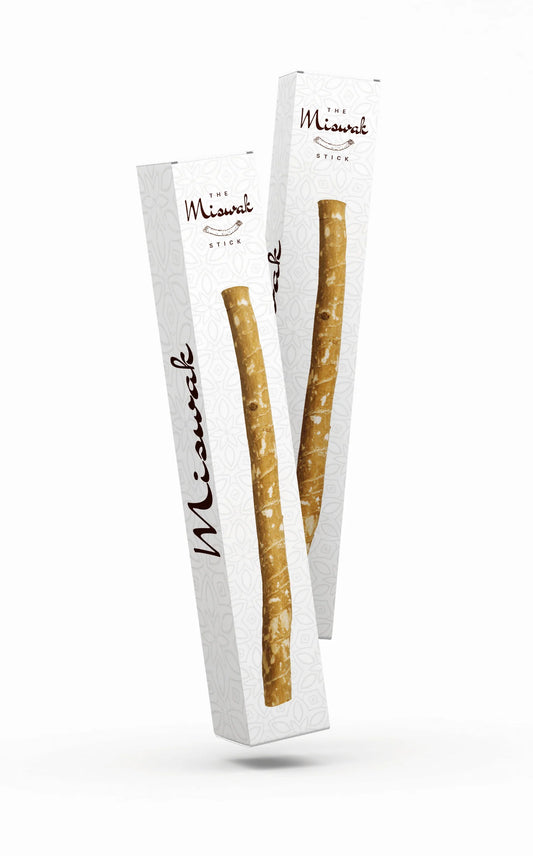
For over a thousand years, people across the Middle East, Africa, and South Asia have cleaned their teeth with a simple twig cut from the Salvadora persica tree: the miswak stick. Long before toothpaste tubes and mouthwash existed, this natural tool was already doing the job effectively.
What makes it work isn't tradition alone. It's chemistry. Inside every miswak stick is a naturally occurring alkaloid called salvadorine, one of the key compounds behind the plant's antibacterial reputation. Understanding salvadorine explains why this simple stick has held its ground against modern dental products for centuries.
What Is Salvadorine?
Salvadorine is a plant alkaloid found in the root and bark of Salvadora persica, the tree from which every miswak stick is harvested. Early phytochemical studies on the plant identified salvadorine alongside trimethylamine as part of a group of alkaloids that make up a significant portion of the root's chemical profile. Alkaloids like salvadorine are nitrogen based compounds, a class of molecules known throughout nature for their biological activity. Many common antimicrobial and medicinal plant compounds fall into this same family.
In the context of a miswak stick, salvadorine is one of the components researchers point to when explaining why chewing on the stick appears to suppress the growth of oral bacteria.
How Salvadorine Supports Oral Health
When a miswak stick is chewed, its fibers naturally separate into soft bristles, releasing the plant's internal compounds directly into the mouth. Salvadorine is thought to contribute to this process by helping inhibit the bacteria responsible for plaque buildup, cavities, and gum irritation.
This lines up with a broader body of research on Salvadora persica extracts, which have shown measurable antibacterial activity against organisms linked to dental plaque and periodontal disease. While salvadorine doesn't act alone, it's considered part of the plant's natural defense chemistry, compounds the tree produces to protect itself that happen to translate well into oral care benefits for humans.
Salvadorine Doesn't Work Alone
A miswak stick isn't a single ingredient product. It's a small chemical toolkit. Alongside salvadorine, researchers have identified several other compounds working together inside the stick:
-
Silica provides gentle, natural abrasiveness that helps mechanically remove plaque, similar to the role of silica in commercial toothpaste.
-
Tannins contribute astringent, protective properties for the gums.
-
Flavonoids such as kaempferol and quercetin offer antioxidant support.
-
Fluoride and chlorides are naturally present in small amounts and support enamel health.
- Sulfur compounds and vitamin C add further antimicrobial and tissue supporting effects.
Salvadorine sits within this natural combination, which is likely why miswak sticks have shown effects comparable to some modern oral hygiene products in comparative studies, even without any added chemicals.
Why This Matters When Choosing a Miswak Stick
Not all miswak sticks are equal. Freshness affects how much of the plant's active chemistry, including salvadorine, remains available when you chew it. A fresh, properly stored miswak stick retains more of its natural compounds than one that has dried out or aged on a shelf for too long.
For anyone switching to a miswak stick as part of a natural oral care routine, this is worth knowing: the value isn't just tradition, it's the retained chemistry of the stick itself.
Where to Get a Genuine Miswak Stick
Since freshness plays such a big role in how much salvadorine and other active compounds remain in the stick, sourcing matters. At The Miswak Stick, every stick is sourced from genuine Salvadora persica root and prepared to preserve its natural chemistry rather than sitting on a shelf losing potency. For anyone looking to actually get the benefits described above rather than a dried out, low quality twig, that freshness is the difference between a miswak stick that works and one that doesn't.
Conclusion
Salvadorine is one of the quiet reasons the miswak stick has survived as an oral hygiene tool for over a millennium. It isn't marketing. It's the plant's own natural chemistry at work. Combined with silica, flavonoids, and other compounds, salvadorine helps explain why something as simple as a stick from a desert tree still holds up in a world full of manufactured alternatives.
FAQ
Is salvadorine safe?
Yes. Salvadorine occurs naturally in Salvadora persica, the same plant miswak sticks come from, and the plant has a long history of safe traditional use as well as toxicity studies supporting its safety profile.
Does every miswak stick contain salvadorine?
Miswak sticks made from genuine Salvadora persica root contain salvadorine as part of the plant's natural composition, though quality and freshness can affect its concentration.
Can salvadorine replace toothpaste?
Salvadorine is one of several compounds contributing to the miswak stick's cleaning effect, but most dental professionals view miswak as a complementary or alternative tool rather than a full replacement for fluoride toothpaste.