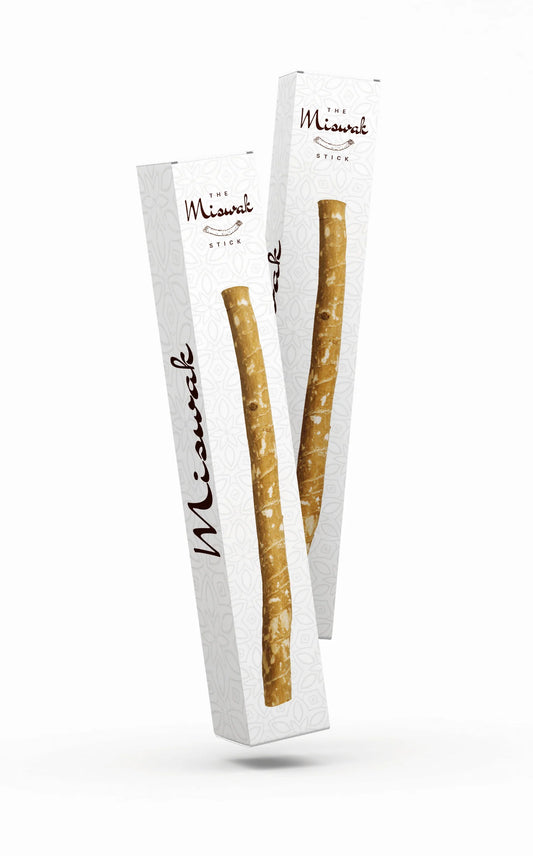
Many people use miswak every day but never stop to ask where it comes from. Is it a root, a branch, or a special type of wood? The answer is simpler than most people think.
Traditional miswak comes from a tree called Salvadora persica. This tree has been used for oral care for hundreds of years and is known by several names in different parts of the world.
In this guide, you'll learn what the miswak tree is, where it grows, what it looks like, and why it has remained popular for so long.
Quick Answer:
Miswak traditionally comes from the Salvadora persica tree. This tree is also known as the Arak tree, Peelu tree, and toothbrush tree.
People use the roots, twigs, and small branches of this tree to make miswak sticks. When chewed, these sticks form soft fibers that can be used to clean teeth and gums.
Because of this natural brushing effect, Salvadora persica has become one of the most well-known trees used for oral hygiene.
What Is the Miswak Tree?
The miswak tree is a small evergreen tree called Salvadora persica. It grows naturally in warm and dry regions where many other plants struggle to survive.
Unlike most trees, Salvadora persica is famous not for its fruit or timber but for its roots and branches. These parts contain soft fibers that make them suitable for cleaning teeth.
For generations, people have cut small pieces from the tree and used them as natural toothbrushes. Even today, many people prefer miswak because it is simple, portable, and easy to use.
The tree belongs to the Salvadoraceae family and can be found in several countries across Asia, Africa, and the Middle East.
Other Names for the Miswak Tree
Depending on where you live, you may hear different names for the same tree.
Arak Tree
In Middle Eastern countries, it is widely known as the Arak tree, and the sticks are often marketed interchangeably as "Arak sticks" or "miswak sticks."
Peelu Tree
In the dry regions of Pakistan and India, this tree is commonly known by its local name, "Peelu."
Toothbrush Tree
This is its popular international nickname because chewing on its twig separates the fibers to look exactly like modern toothbrush bristles.
What Does the Miswak Tree Look Like?
Many people know about miswak sticks but have never seen the actual tree.
Learning how to identify the tree can help you better understand where authentic miswak comes from.
Size and Shape
The miswak tree is usually small to medium in size.
Most trees grow between 6 and 20 feet tall, although some may grow larger under the right conditions.
The tree often has a rounded shape with many spreading branches.
Its appearance can look more like a large shrub than a tall forest tree.
Leaves
The leaves of the miswak tree are small, smooth, and green.
They have a thick texture that helps the tree survive in hot weather.
Because the tree stays green throughout the year, it is considered an evergreen species.
Bark
The bark is generally rough and light brown or gray in color.
When a branch is cut, the inside reveals fibrous material that is often used to make miswak.
This fibrous texture is one reason the tree is valued for oral care.
Fruit
The tree produces small, round fruits that change color as they ripen.
These fruits are usually green at first and later become red or purple.
In some regions, people even eat the fruit when it becomes fully ripe.
Although the fruit is interesting, the tree is mainly known for its roots and branches rather than its berries.
Where Does the Miswak Tree Grow?
One reason Salvadora persica became widely used is that it grows in several parts of the world.
The tree adapts well to hot temperatures and dry conditions.
1. Pakistan
In Pakistan, the Peelu tree grows naturally in many dry and semi-dry regions.
It is especially common in areas where rainfall is limited.
Because the tree grows locally, miswak has remained easily available for generations.
2. India
The tree can also be found in parts of India.
It grows well in warm climates and is often seen in regions with sandy soil.
Many communities have used the tree for traditional oral care practices for a long time.
3. The Middle East
The Middle East is one of the regions most closely associated with miswak.
Countries across the Arabian Peninsula have a long history of using Salvadora persica.
This is one reason the tree became known internationally as the Arak tree.
4. Africa
The miswak tree also grows in several African countries.
Its ability to survive in dry environments makes it well suited to many parts of the continent.
Even in areas with limited water, the tree can continue to grow and produce new branches.
Why Does It Grow Well in Dry Areas?
The tree has adapted to harsh conditions over many years.
Its root system helps it access water deep below the ground.
Its thick leaves also reduce water loss during hot weather.
These features allow Salvadora persica to survive where many other trees would struggle.
Why Is Salvadora Persica Called the Toothbrush Tree?
The name toothbrush tree comes from a very simple natural feature of Salvadora persica.
When a small stick from the tree is chewed at one end, it slowly breaks into soft fibers. These fibers spread out like the bristles of a modern toothbrush.
Long before plastic toothbrushes were invented, people used these natural fibers to clean their teeth. This is why the tree earned its famous nickname.
Which Part of the Tree Is Used for Miswak?
Not every part of the miswak tree is used for oral care.
People mainly use three parts of the tree:
--> Roots
Roots are often preferred because they are strong and contain dense fibers.
--> Twigs
Small twigs are commonly used because they are easy to cut and carry.
--> Small Branches
Thin branches are also used when fresh twigs are not available.
These parts are cut, cleaned, and then prepared for use as miswak sticks.
Are All Miswak Sticks Made From Salvadora Persica?
Not all chewing sticks in the world come from Salvadora persica.
However, when people say “authentic miswak,” they are usually referring to this specific tree.
In some regions, people also use neem or olive sticks for cleaning teeth. These are similar in use but come from different trees and are not traditionally considered true miswak.
How Can You Identify Authentic Miswak?
If you want to make sure you are using real miswak, here are some simple signs:
- Smell
Authentic miswak usually has a mild natural woody smell.
- Texture
The stick feels slightly rough on the outside but becomes soft when chewed.
- Fibers
When chewed, the tip naturally separates into fine brush-like fibers.
- Source
The safest way is to buy from trusted sellers who clearly mention Salvadora persica.
Why Has the Miswak Tree Been Used for So Long?
People have used Salvadora persica for centuries for several simple reasons:
-
It is easy to find in dry regions
-
It does not require tools or machines
-
It naturally forms brush-like fibers
- It can be used anywhere at any time
Before modern toothbrushes, this was one of the easiest ways to clean teeth naturally.
Interesting Facts About the Miswak Tree
Here are some simple but interesting facts:
-
It is also called the toothbrush tree
-
It can survive in very dry climates
-
It grows naturally in Asia, Africa, and the Middle East
-
Its fruits are small and sometimes edible
-
It has been used for hundreds of years
- It does not need much water to grow
These features make it a very unique and useful tree in nature.
Frequently Asked Questions
Is miswak made from only one type of tree?
No. Traditional miswak comes from Salvadora persica, but some chewing sticks are also made from neem, olive, and other trees depending on the region.
What is the miswak tree called in Pakistan?
In Pakistan, it is commonly called the Peelu tree. Its scientific name is Salvadora persica.
Which part of the tree is used to make miswak?
People usually use roots, twigs, and small branches of the tree to make miswak sticks.
Why is it called the toothbrush tree?
It is called the toothbrush tree because its fibers naturally spread out like a toothbrush when chewed.
How can I tell if a miswak stick is authentic?
Authentic miswak comes from Salvadora persica and forms soft brush-like fibers when chewed at the tip.
Does the miswak tree grow outside the Middle East?
Yes. It also grows in Pakistan, India, and many African regions where the climate is hot and dry.
Final Thoughts
When answering the question, "what tree does miswak come from", the definitive source is the Salvadora persica tree (also known as Arak or Peelu). This tree is uniquely designed by nature with fibers that perfectly mimic a toothbrush. Choosing authentic Salvadora persica ensures you get the true traditional benefits of this natural oral care tool.