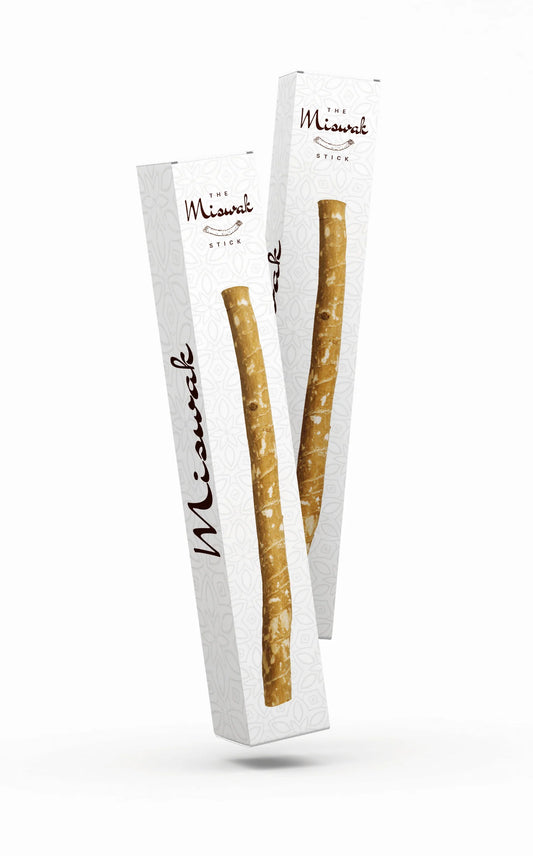
Short answer: yes. A growing body of peer-reviewed research shows that miswak sticks clean teeth and support gum health as effectively as a conventional toothbrush, and in several studies, even more effectively.
That might surprise anyone who assumes a stick cut from a tree cannot compete with a modern toothbrush. But the science tells a different story, and it is worth understanding why before you decide whether a miswak stick belongs in your daily routine.
What Is a Miswak Stick, Exactly?
A miswak is a small chewing stick cut from the roots, twigs or stem of the Salvadora persica tree, often called the "toothbrush tree." People across the Middle East, Africa and South Asia have used it for oral hygiene for thousands of years, long before the plastic toothbrush existed. One end is chewed until it frays into soft, brush-like fibers, which are then used to clean the teeth and gums. For the full history, our guide on what a miswak stick actually is covers it in detail.
The real question most people want answered is simpler: does it actually work, or is this just tradition dressed up as wellness marketing?
What the Research Actually Found
A scientific review published in the Saudi Medical Journal pulled together decades of clinical and laboratory studies on Salvadora persica, and the findings are hard to dismiss.
It Fights the Bacteria Behind Plaque and Cavities
Multiple studies tested miswak extract against the exact bacteria responsible for tooth decay and gum disease, including Streptococcus mutans, the main culprit behind cavities. The results were consistent: miswak showed strong antibacterial activity, and in one clinical study, it reduced Streptococcus mutans more effectively than brushing with a conventional toothbrush. Researchers also found it fights bacteria linked to periodontitis, including Porphyromonas gingivalis and Aggregatibacter actinomycetemcomitans.
It Helps Prevent Cavities
A year-long clinical trial followed 330 high school students, half using miswak daily and half using a toothbrush. By the end of the year, the toothbrush group had a 55% higher rate of new cavities per tooth, and their overall risk of developing a cavity in any given tooth was 9.35 times higher than the miswak group's. Researchers point to two likely reasons: miswak naturally contains fluoride, and chewing it increases saliva flow, which helps neutralize the acids that wear down enamel.
It Supports Healthier Gums
One trial found that brushing with a miswak five times a day reduced gingivitis on both the outer and inner surfaces of the teeth more than a conventional toothbrush did. Even twice-daily use outperformed a toothbrush on the outer, cheek-side surfaces. Another study found that while miswak and toothbrushing had a similar overall effect on bacteria below the gumline, one specific bacteria strain linked to gum disease was reduced significantly more with miswak. Researchers who compared the two concluded that miswak is at least as effective as a toothbrush for preventing gingivitis, and may work even better at clearing plaque from the small gaps between teeth.
It Has Antifungal and Antiviral Properties
Lab studies show miswak extract inhibits the growth of Candida albicans, the fungus responsible for oral thrush, along with several other Candida strains. One study even found miswak compounds active against the herpes simplex virus under laboratory conditions. This may be one reason miswak use has been linked to lower rates of oral thrush in patient groups who are especially vulnerable to fungal infection.
It Changes Your Saliva for the Better
Chewing a miswak triggers an immediate rise in calcium and chloride levels in saliva. Calcium helps remineralize enamel, and chloride helps slow the formation of calculus, or hardened plaque. Researchers believe this immediate chemical shift, combined with the physical act of chewing, is part of why miswak performs so well in clinical trials.
It Carries Natural Antioxidant and Anti-Inflammatory Compounds
Miswak contains natural antioxidants, including tocopherols, the same family of compounds found in vitamin E. Studies have also found anti-inflammatory and analgesic activity in Salvadora persica extract, adding to its long-standing reputation as a natural remedy for irritated gums and toothaches.
Miswak vs Toothbrush: How Do They Actually Compare?
This is the part most people care about most, and the research is refreshingly clear. Across multiple clinical trials, miswak matched or outperformed a conventional toothbrush for removing plaque and improving gum health, especially when used correctly and consistently. The two tools clean slightly differently. Miswak fibers run along the length of the stick, so they reach the front surfaces of your teeth very well but can be harder to angle toward the back of your mouth. A toothbrush's angled head makes it easier to reach your molars.
That is why many dentists suggest the best results come from combining the two: miswak throughout the day for a quick natural clean, and a toothbrush for a more thorough session. We go deeper on this comparison in what actually beats a toothbrush.
Are There Any Downsides?
Good research does not cherry-pick its results. A few studies found that long-term miswak users had a higher rate of gum recession than toothbrush users, which is more likely when the stick is used with too much pressure or an aggressive scrubbing motion. Other research linked heavy miswak use, alongside habits like nail-biting and high fruit juice intake, to increased tooth wear over time.
None of this means miswak does not work. It means technique matters, the same way brushing too hard with a toothbrush can wear down enamel and irritate gums. Gentle pressure, letting the fibers do the work instead of scrubbing, and giving your gums a break if you notice sensitivity will help you get the benefits without the drawbacks.
How to Get the Best Results
Consistency matters more than intensity. Chew the tip until it softens into fibers, brush gently in a rolling motion, and trim the frayed end when it wears out so you are always brushing with a fresh, brush-like tip. Curious how long a stick actually lasts, or how many minutes you should spend brushing? We cover both in our guides on miswak shelf life and how long to brush with miswak.
The Verdict: Does Miswak Actually Work?
Yes. The clinical evidence is genuinely strong. Miswak fights the bacteria behind cavities and gum disease, holds its own against a standard toothbrush in head-to-head trials, and brings antifungal, antioxidant and anti-inflammatory properties that most toothbrushes simply cannot claim. It is not a replacement for regular dental checkups, and technique matters, but as a daily oral hygiene tool backed by real research and centuries of everyday use, miswak earns its reputation.
Frequently Asked Questions
Is there actual scientific proof that miswak works?
Yes. Dozens of peer-reviewed studies, including clinical trials and laboratory research, have tested miswak against the bacteria responsible for cavities and gum disease. The evidence consistently shows measurable antibacterial, antiplaque and anticavity effects.
How long does it take to see results from using a miswak stick?
Many users notice fresher breath and a cleaner-feeling mouth within the first week. Improvements in gum health and reduced plaque typically show up within two to four weeks of consistent daily use, which lines up with the timelines used in most clinical studies.
Can a miswak stick fully replace my toothbrush?
It can, and many long-term users do exactly that. That said, some dentists recommend combining a miswak with regular toothbrushing, since the two clean slightly different surfaces of the mouth. Either approach is supported by research.
Is it safe to use a miswak stick every day?
Yes. Daily use is how most studies tested it, and it does not require water or toothpaste. Just avoid brushing too aggressively, since heavy-handed use has been linked to gum recession in some studies.
Does miswak have any side effects?
Miswak is generally well tolerated. The main risk noted in research is gum recession from excessive pressure or overly aggressive use, which is avoidable with a gentle technique.
Try The Miswak Stick For Yourself
The Miswak Stick brings this centuries-old, research-backed tool to your door in a clean, modern package. Every stick is cut from the Salvadora persica tree, completely natural, chemical-free and biodegradable, with free shipping on orders over $15. The team is also currently pursuing graduate research at the University of Oxford, through the MSc in Nanotechnology for Medicine and Healthcare program, to study how modern science can further improve the miswak for everyday use. So you are getting a product built on both tradition and ongoing research, not just a bold claim on a label. Many customers report fresher breath and a visibly brighter smile within weeks of switching, and 20% of every sale goes toward humanitarian aid. Ready to try it?